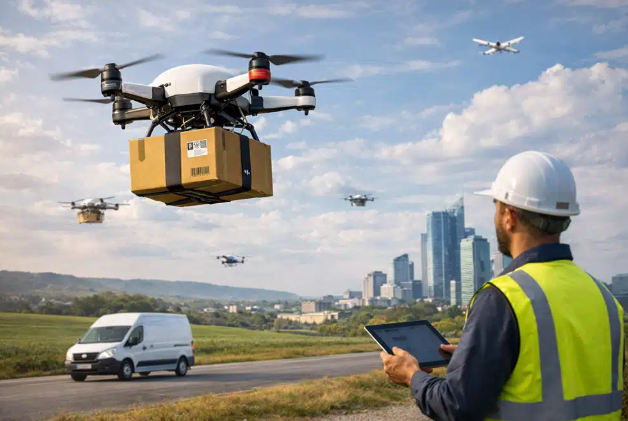
Drone technology is steadily transforming delivery services, offering notable advantages in speed and efficiency. Businesses are beginning to recognize the potential for reduced operational costs and improved customer satisfaction. However, the integration of drones into logistics is not without its challenges. Regulatory frameworks are evolving, but questions remain about their implications. As these developments unfold, the logistics landscape is poised for significant change, prompting a closer examination of what lies ahead.
The Benefits of Drone Delivery: Speed and Efficiency
As urban areas continue to grapple with congestion and logistical challenges, the adoption of drone delivery systems emerges as a transformative solution, enhancing both speed and efficiency in the distribution of goods.
This innovative approach not only leads to significant cost reduction for businesses but also elevates customer satisfaction by ensuring timely deliveries.
Ultimately, drones offer a promising pathway to a more liberated delivery landscape.
Overcoming Challenges in Drone Delivery Logistics
While drone delivery offers promising advantages, various logistical challenges must be addressed to ensure its successful integration into existing supply chains.
Route optimization is critical for maximizing efficiency, ensuring timely deliveries while minimizing costs.
Additionally, airspace management is essential to prevent collisions and ensure safe operations.
Overcoming these challenges will pave the way for a more streamlined and effective drone delivery system, enhancing freedom in logistics.
See also: Digital Twins Technology Explained
Regulatory Framework: What You Need to Know?
What regulations govern the burgeoning field of drone delivery services? Compliance requirements are essential, ensuring operators adhere to safety and operational standards.
Airspace regulations dictate where drones can fly, balancing innovation with public safety.
As this industry evolves, understanding these frameworks will empower stakeholders to navigate legal landscapes, fostering a climate that encourages growth while safeguarding individual freedoms in an increasingly connected world.
The Future of Drone Delivery: Trends and Innovations
Emerging trends and innovations in drone delivery are poised to revolutionize logistics and consumer experiences, particularly as advancements in technology continue to accelerate.
Autonomous navigation systems are enhancing operational efficiency, enabling drones to seamlessly navigate complex urban airspace.
As these technologies evolve, they promise not only faster deliveries but also greater accessibility, ultimately empowering consumers while transforming traditional delivery paradigms.
Conclusion
In conclusion, drone technology is poised to revolutionize delivery services, akin to the way the steam engine transformed transportation in the 19th century. As businesses embrace the benefits of speed and efficiency, overcoming logistical challenges becomes imperative. With evolving regulations supporting this innovation, the future of drone delivery promises to reshape consumer expectations and logistics operations. As advancements continue, the landscape will undoubtedly evolve, leading to a world where rapid deliveries become as commonplace as a horse-and-buggy ride.