In-home senior care that has shifted from being a luxury to a strategic requirement for families in the changing environment in 2026. This model is based on a blend of health monitoring and Aging in Place trends, and it is emotionally stable and clinically safety-oriented with no institutional vibe associated with traditional facilities.
This guide discusses the reasons why home-based care is the gold standard of reliability and how other care providers, such as Langhome PA Homewatch Caregiversare transforming the contemporary care experience.
1. Individualized Assistance in Daily Confidence
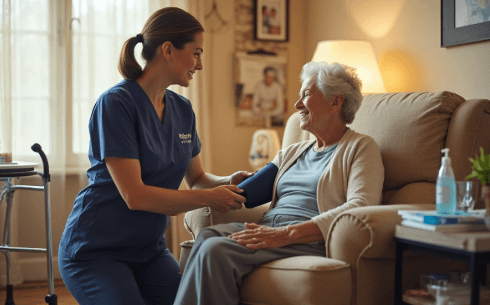
In-home care is individualized, unlike the assisted living facilities, which are one-size-fits-all. Care givers pay attention to particular individual practices and sentimental needs so that the elderly are defined as cherished and not controlled.
- Adaptive Care Plans: Services will change with changes in the health or mobility status of the individual.
- Trust-Based Consistency: This kind of relationship is established regularly by the same professional, which creates a strong emotional connection.
2. Scalable Care Plans with the Maximum Flexibility
The contemporary model of care is established on fluidity. The intensity of support that families provide can be changed depending on the real-time life changes.
- Lifestyle-Based Schedules: Support is added or withdrawn depending on the availability of the family.
- Hybrid Help: Select either part-time companionship or full-time medical help.
- Zero Displacement: Advanced care is carried to the elderly, and the ordeal of relocating is removed.
3. Improved Safety by Intensive Surveillance of the Environment
A home that we know is a safer home. In-home care determines certain environmental risks that may be ignored in the general facilities.
- Mobility Support: Assistance to help with transfers and walking to avoid falls.
- Active Hazard Elimination: The carers ensure an orderly and clean environment
- Stress Reduction: Seniors in a familiar environment will be less confused, and hence the risk of accidents will be reduced.
4. Emotional Well-Being With Loyal Accompaniment
One of the major health hazards in 2026 is isolation. This is solved by the regular and human interaction in in-home care.
- Fighting Loneliness: Conversing regularly and in a friendly manner helps keep the mind alert.
- Positive Mindset: Significant interaction of everyday activities can decrease stress and depression levels.
- Reassurance: The presence of a caregiver is a safety net in a state of uncertainty.
5. 2026 Technology to integrate transparent care
With the emergence of the Matter smart home protocol and wearable health tech, in-home care is now more specific than ever.
- Digital Real-Time Updates: Families are instantly informed about day-to-day activities and health data.
- Smart Reminds: Automatic medications and task management.
- Open Records: Digital records keep the caregivers and families in complete sync.
6. Professionalism Intersects with Compassionate Care
The 2026 Reliability is characterized by the Human-Centric approach. Posters such as Langhome PA Homewatch Caregivers educate employees to balance between clinical duties and profound empathy.
- Autonomy Support: The caregivers encourage the seniors to do what they are capable of doing and avoid humiliation.
- Professional Crisis Management: Physical and emotional outbursts are dealt with by the expert with patience.
7. High-ROI: The Cost-Effective Alternative
Home-based care is what is usually the wisest financial choice in the contemporary household.
- Pay-Per-Need: Families are not subjected to the high fixed overhead of institutional “bundles.”
- Lower Relocation Expenses: Does away with the huge cost of selling a house or transferring to a facility.
- Foreseeable Budgeting: Adaptable plans can be used to plan finances better in the long run.
See also: Drone Technology in Delivery Services
Comparison: In-Home Care vs. Institutional Settings (2026)
| Feature | In-Home Care | Institutional Facility |
| Environment | Familiar & Comforting | Clinical & Unfamiliar |
| Schedule | Custom to User | Fixed Facility Routine |
| Cost Model | Pay-for-Service | Fixed Monthly Package |
| Personal Attention | 1-on-1 Dedicated | Shared Among Residents |
| Technology Use | Personalized Smart Home | Centralized Monitoring |
Strategy FAQ: Senior Support Navigation.
Why is in-home senior care better than the others?
It is based on the principle of 1-on-1 personalized support in a familiar environment with the highest level of independence and professional help.
Is home care an option as long term care?
Yes. Due to the complete adjustability of plans, the care may expand beyond mere companionship to full medical assistance as the elderly gets older.
What are providers doing to ensure that safety is at home?
Home safety checks, assist mobility, and constant monitoring are carried out by caregivers to prevent falls or accidents.
What is the purpose of technology in 2026?
It can be done through smart tools that allow the family members to be informed about changes and health tracking digitally to ensure that the care is planned and clear, even when the family members are not present.
A Confident Way to Go
Home-based care is the most viable means of upholding the dignity of an aging adult and guaranteeing his or her safety. When families select reliable partners such as Langhome PA Homewatch Caregivers, they get an ally in the caregiving process, which provides a consistent, calming atmosphere to their loved ones to flourish.